
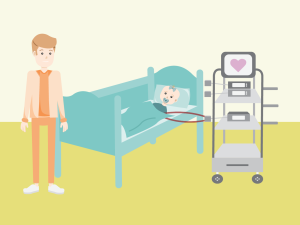
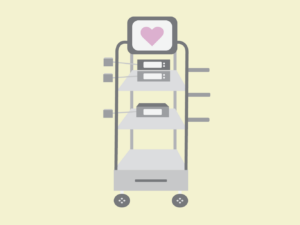
There are several parts within the CentriMag™ and PediMag™ systems.
Cannula
During VAD surgery, your heart surgeon will place cannulas that are special tubes made of a very soft silicone material. These soft cannulas will come out of your lower chest area just below your breastbone. Your heart has two pumping chambers, a left ventricle and a right ventricle. Your cardiologist and surgeon will decide if you need support on just one ventricle or both. If you only need support for one ventricle, you will have two cannulas. If you need support for both ventricles, you will need four cannulas.
Circuit
The circuit is clear tubing that connects the cannulae to the blood pump allowing the blood to circulate.
Blood Pump
The blood pump is a round disc with fins called an impeller. As the impeller spins, it pulls blood out of the weak ventricle through the circuit and then pushes the blood back out to the rest of the body. There are two different pump sizes. The PediMag™ is the smaller device, generally used for infants and toddlers.
Console
The electronic console allows the care team to control the speed of the impeller, monitor how the device is working and troubleshoot any alarms.
 CentriMag™ and PediMag™ can be used to help a heart pump for many reasons. Depending on your situation, it may be used as:
- Bridge to Transplant: To support the heart until the best donor heart is available for transplant.
- Bridge to Recovery: To support the heart if there is a chance the heart will recover.
- Bridge to Decision: To support the heart until a decision can be made by the family and medical team regarding next steps (surgeries or medications).
A CentriMag™ or PediMag™ may help reduce heart failure symptoms and improve quality of life as you continue along your journey.
 There are also some risks associated with having a VAD, but your care team will work hard to keep you safe.
Infection
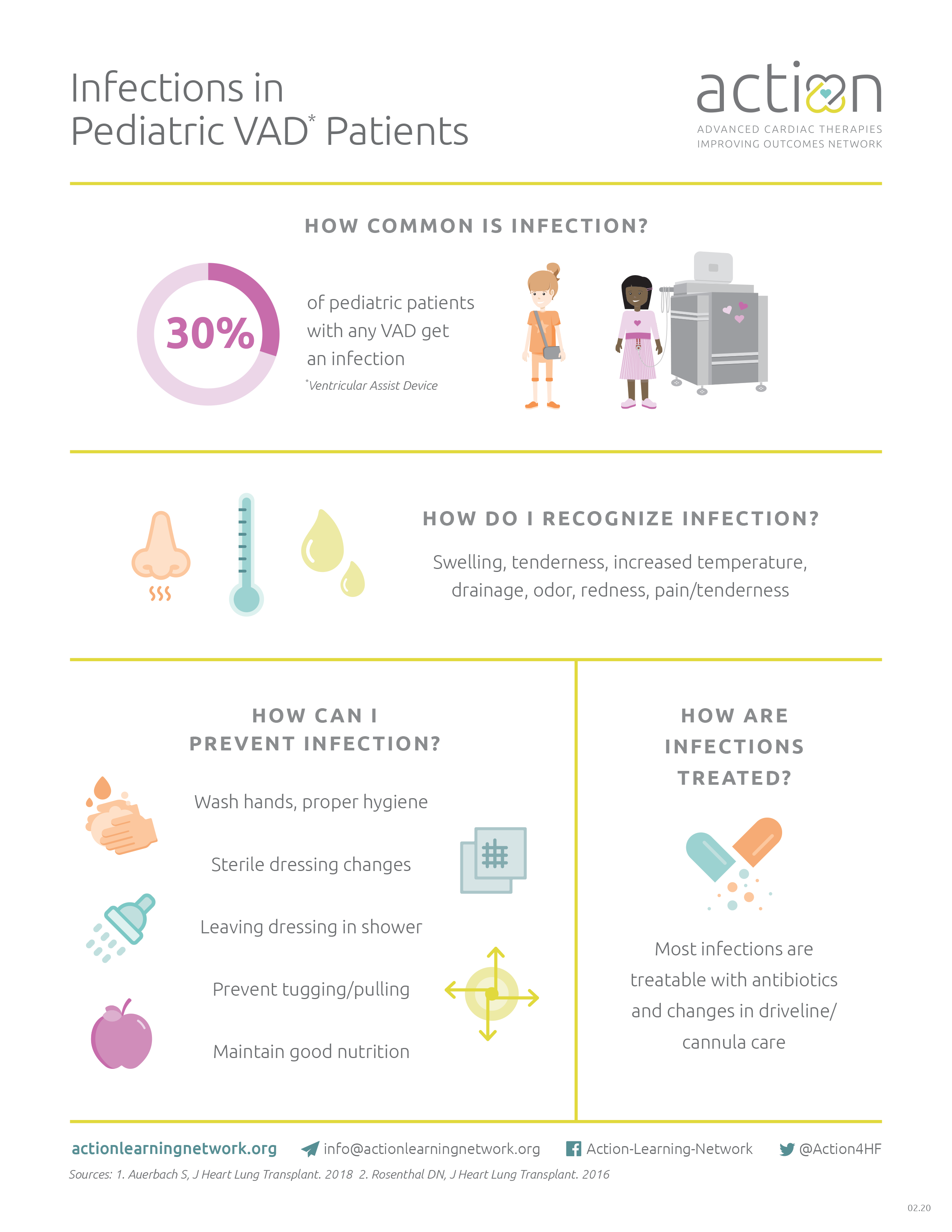
The soft cannulae come out of your belly and will need to be cleaned frequently. This is important because bacteria lives on your skin and may cause an infection at your cannula site. You may feel nervous the first few times your dressings are changed, but your care team will be there to support you.
Bleeding
There is a risk of bleeding with all VADs, but it is more common with a CentriMag™ or PediMag™. To prevent clots from forming in the device, you have to be on a blood thinner. Sometimes the blood thinner will lead to bleeding that may require a change in medicines, a blood transfusion, or in some cases, a surgery to stop the bleeding. Your care team will manage your blood thinner medicine and levels carefully to try to prevent bleeding. Sometimes, even with perfect levels bleeding will occur.
Stroke
There is a risk of stroke with all VADs. A clot can form in the VAD, become dislodged, and may travel up a blood vessel to the brain. A blood clot in the brain leads to a decreased blood flow to the brain in that specific area, and this is called a stroke. Your care team will manage your blood thinner medicines and levels carefully to try to prevent a stroke. Sometimes, even with perfect levels, a stroke will occur.
Your care team will monitor you for the following symptoms:
- Headache
- Confusion
- Numbness and/or tingling on one side of the body
- Weakness on one side of the body
- Slurred speech


The Berlin Heart helps patients with heart failure, as it improves blood circulation. A Berlin Heart may help reduce heart failure symptoms and improve quality of life while waiting for a heart transplant or your heart to get better.
 There are some risks with a Berlin Heart, but your care team will work hard to keep you safe.
Infection
The soft cannula will come out of your lower chest and will need to be cleaned frequently. This is important because bacteria lives on your skin and may cause an infection at your cannula site. You may feel nervous the first few times your dressings are changed, but your care team will be there to support you.
Stroke
There is a risk of stroke with all VADs. A clot can form in the VAD, become dislodged, and may travel up a blood vessel to the brain. A blood clot in the brain leads to a decreased blood flow to the brain in that specific area, and this is called a stroke. Your care team will manage your blood thinner medicines and levels carefully to try to prevent a stroke. Sometimes, even with perfect levels, a stroke will occur.
Your care team will monitor you for the following symptoms:
- Headache
- Confusion
- Numbness and/or tingling on one side of the body
- Weakness on one side of the body
- Slurred speech
Bleeding
There is a risk of bleeding with all VADs. To prevent clots from forming in the device, you have to be on a blood thinner. Sometimes the blood thinner will lead to bleeding that may require a change in medicines, a blood transfusion, or in some cases, a surgery to stop the bleeding. Your care team will manage your blood thinner medicine and levels carefully to try to prevent bleeding. Sometimes, even with perfect levels bleeding will occur.

